PUMICE
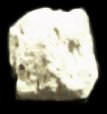
(from Vesuvius)
'Course, you can use it to scrape the hard skin off your feet too!
PUMICE
| This is a light, porous rock with the composition of rhyolite. Pumice usually tends to be used as a textural term - applied to vesiculated lavas that may resemble froth or foam. This rock has a highly scoriaceous texture, with many hollows and cavities. The vesicles may join to form elongated passages and tubes throughout the rock. Zeolites may fill these cavities. The density of pumice is so lo9w that it can easily float in water. It forms as frothy lavas associated with rhyolitic volcanic eruptions. When erupted into the sea, patches may drift for great distances. Pumice can also be formed by land-bound volcanic eruptions.
'Course, you can use it to scrape the hard skin off your feet too! |