OLIVINE
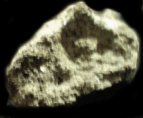
(from Vesuvius)
(Mg,Fe)2SiO4
The minerals compromising the Olivine group are chemically and physically similar, and it is very hard to distinguish one from the other. Therefore, these minerals are rarely called by their real name, but are just called "Olivine".
Olivine is a very common mineral, but it rarely occurs in sizes larger than microscopic grains. For this reason, larger specimens are rare and sought after. Only few localities yield large examples of this mineral, although small grains are found worldwide. Olivine is also found in meteorites, and some large grains have been reported in many of them.
Olivine occurs worldwide, but only few places yield large crystals.
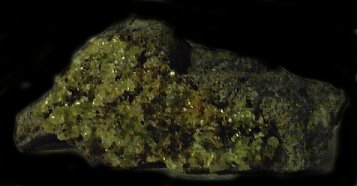
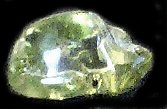
peridot from Arizona (to the left, smothered over its matrix of basalt)
Gem-quality specimens of the mineral olivine are called peridot by gemmologists. Peridot has an love-or bottle-green colour due to the presence of iron, and a distintive oily or greasy lustre. It is found on St John's Island (Egypt), in China, Burma, Brazil, Hawaii and Arizona, Australia, South Africa and Norway. The Crusaders brought peridot to Europe in the Middle Ages, transporting stones from St John's Island in the Red Sea, where it has been mined for over 3,500 years.
Hardness: 6 1/2 - 7
| Peridot, as well as being recommended as a cure for insomnia, is said to aid the digestion and placate the nervous system.. Improves bruised eyes. Can cleanse and heal hurt feelings, helps mend damaged relationships. Counteracts negativity and opens the mind. It acts like a tonic and heals the physical body and can be useful in reducing fever. Also used in treating emotional states such as anger or jealousy. |