FLUORITE
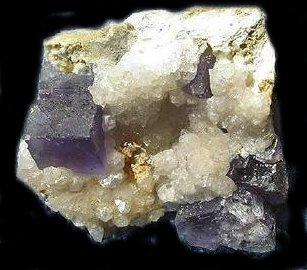 purple fluorite crystals in quartz; from New Mexico, USA | 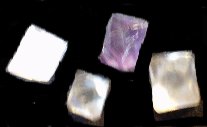 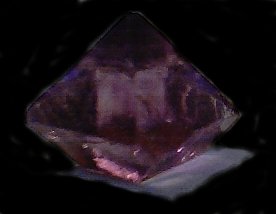 Varying shades of fluorite octahedrons from Mexico |
Fluorite, or calcium fluoride (CaF2), is a simple halide commonly occurring as a glassy, hued, vein in a variety of mineral environments. It is commonly found in metallic hydrothermal deposits associated with lead, silver, galena, sphalerite, cobalt and other economic minerals. It also occurs in cavities of pegmatites, in hot-springs areas and in sedimentary rocks, primarily limestones that have been permeated by aqueous fluoride.
One of fluorite's ingredients, the active element fluorine, is a violent poison that is also the most active of elements, capable of eating through glass and metal. Discovery and isolation of this element caused the death and permanent injury of many scientists. Another fluorine compound, hydrofluoric acid, is used to etch glass, dissolve quartz, and other minerals.
But fluorite is a harmless mineral of great beauty and variety, ranging from yellow to green to blue to red and all shades in between. It forms in lovely crystals that range from simple cubes to complex combinations showing as many as 48 faces or more.
The name flourite is from the Latin "fluere" which means, "to flow", because it melts easily and is used as a flux in the smelting of metallic ores. Fluorite is used in the manufacture of steel and hydrofluoric acid. It is a staple in one's stones usedfor determining hardness of other stones, because of its rating of 4. It is a relatively soft stone and can scratch or chip easily, so is rarely used in jewellery - although is a very popular stone amongst collectors. It occurs in a variety of colours, including colourless, green, blue, purple, magenta, pink, yellow, or a combination of several colours.
Hardness: 4. Other characteristics.

fluorite from Illinois, USA
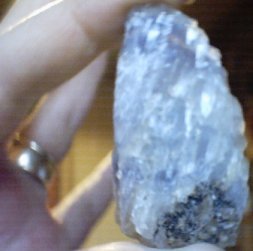
Blue John Fluorite
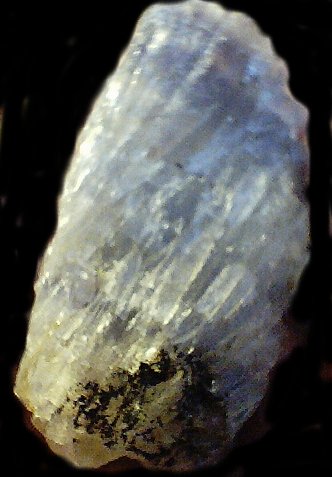
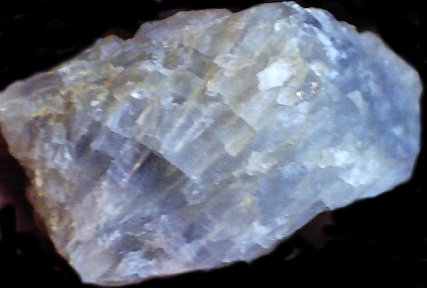
Blue John fluorite is a famous variety of purple and yellow banded fluorite from Derbyshire in England. The Ancient Romans believed that drinking alcohol from a cup made of Blue John would allow the drinker to imbibe without becoming drunk.
|
Fluorite offers a stabilizing energy, facilitating order, balance and healing. Excellent for clarity of mind, objectivity, concentration and meditation. Aids in grasping higher, more abstract concepts, and to be discerning as to the truth or reality of a given situation. Balances and cleanses intellectual and physical bodies. Strengthens bones and teeth and is used for dispelling illness in its early stages. Renews spring-time energy to all the chakras. Transmutes negativity toward the light and love. Diminishes trauma to the emotional body. Imparts impartiality and discernment. Fluorite strengthens bone tissue, especially the teeth enamel; as well as stimulates the mucous membranes and lung tissue. Green fluorite also specifically acts toward disorders of the stomach and intestinal tracts.
Healing: Bones, teeth, inflammations. |