ARAGONITE
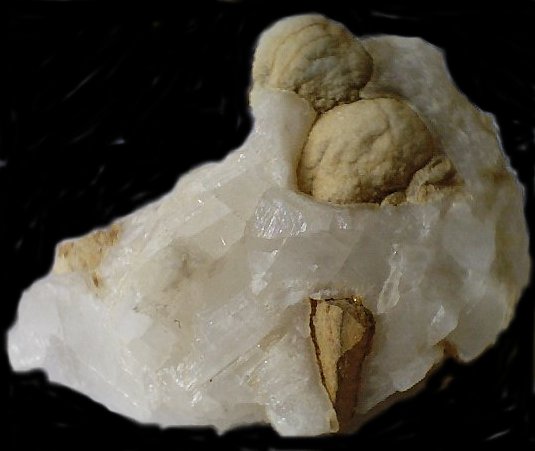
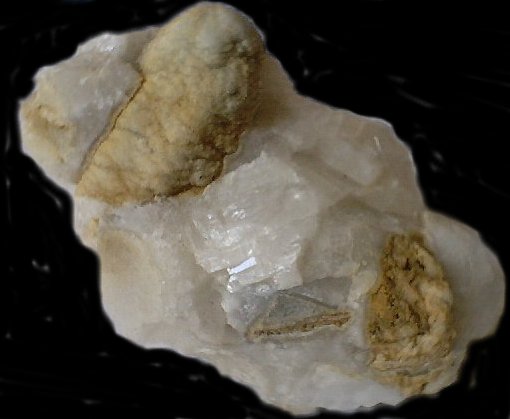 Aragonite pseudomorphs (dolomite) in calcite, Monroe, Washington, USA |
Aragonite frequently contains sand inclusions, which give a specimen a brown color. It forms in many environments, but a particularly interesting one is its formation from deposition of hot, mineral-rich springs. The water releases the calcium it contains upon reaching the air, and forms mounds and thick crusts around the springs. When these deposited mounds and crusts are banded, they are sometimes carved and termed "Onyx Marble", "Suisan Marble", "California Onyx", or "Mexican Onyx".
Aragonite is the main component of many organic substances, such as pearl and coral. The iridescent surface of pearl and mother-of-pearl is a layer of Aragonite secreted by mollusks and related invertebrates.
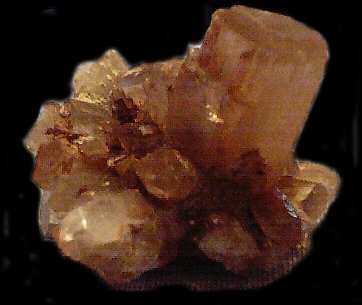
aragonite from Morocco (unpseudomorphed) - demonstrating the brown colour created by sand
Hardness: 3.-4. Other characteristics.