APOPHYLLITE
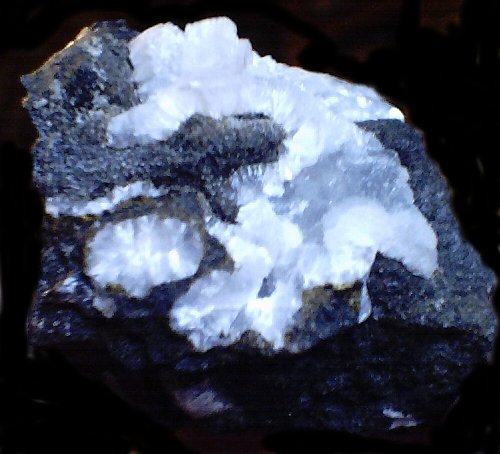
from Moonen Bay, Isle of Skye, Scotland
(K,Na)Ca4Si8O20(F,OH) - 8H2O, Hydrated Potassium Calcium Sodium Silicate Fluoride Hydroxide. Apophyllite, whose name roughly means "to leaf apart" in Greek, is a mineral classic. It was given its name because crystals tend to peel or flake apart when they are heated due to the loss of water molecules. Although not that well-known by the general public, apophyllite is quite popular among mineral collectors. It is probably the first exotic mineral that a young collector will own after filling up on specimens of calcite, quartz, pyrite, galena, mica, fluorite, gypsum, apatite, etc, etc. After these common minerals, apophyllite seems like a real rarity and it offers so much to the collector. It has beauty, pastel colors, a bright luster, interesting well formed habits, unusual associations with other exotic minerals and recently large amounts of quality specimens have become available at amazingly low prices from just a decade ago. What more could a collector want in a mineral?
Unfortunately, apophyllite is not a mineral ! Not officially at least. Apophyllite is a general term for three official minerals that are similar in their chemistry and physical properties. Fluorapophyllite is by far the most abundant and colorful of the three and is usually what is referred to when a specimen is just labeled apophyllite. Hydroxyapophyllite is also relatively common, but specimens typically lack any color and are limited to pseudo-cubic crystal habits. The natroapophyllite is quite rare and is found at only a few localities. Its typical brown color can help distinguish it from its close cousins. Natroapophyllite, by virtue of its more significant chemical and symmetrical difference, is truly a distinct mineral. Fluorapophyllite and hydroxyapophyllite however are a different story. The two are different minerals only because of the difference in the percentage of fluorine to hydroxyl ions. They represent the end members of a series that could be called the apophyllite series. The name apophyllite persists however and its usage is widespread especially when distinguishing the true identity of specimens is difficult.
Hardness: 4.5-5
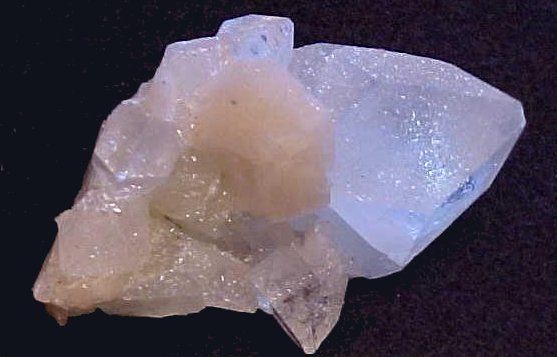
and here's a beaut piece of stilbite on apophyllite from Poona, India. (Apophyllite white; stilbite pink)
Notice the fine coating of druzy quartz sprinkled over it - shiny!
See also Zeolites